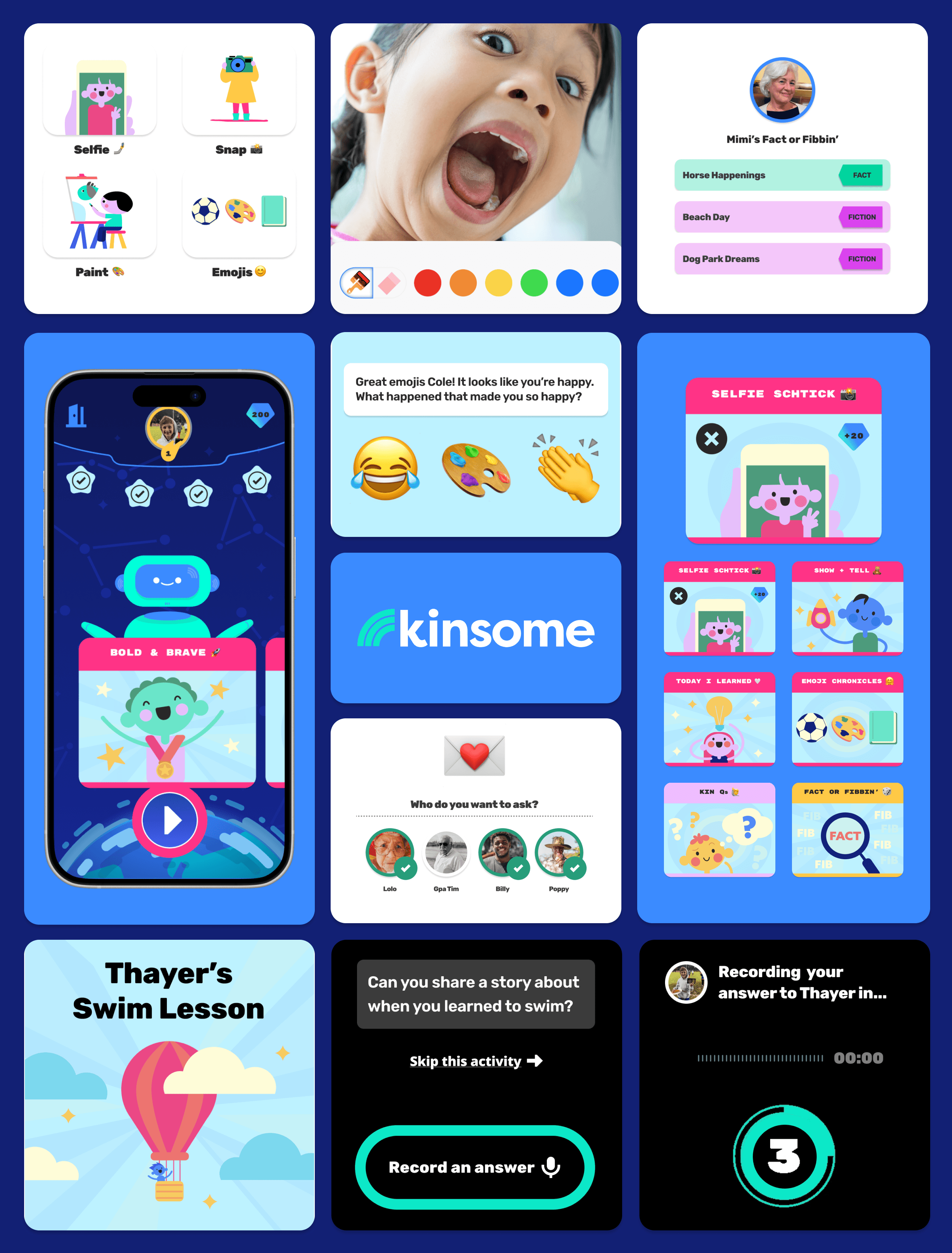
Kinsome | AI-powered Intergenerational Storytelling Platform
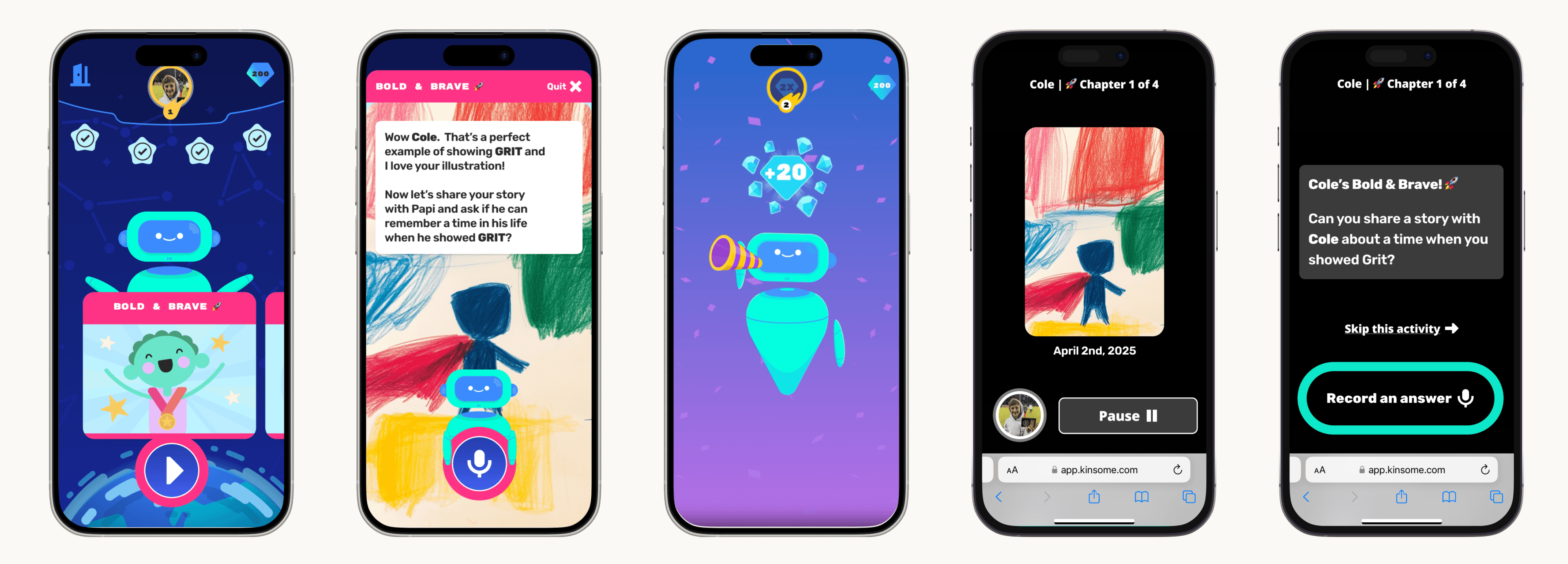
Deepening connection between children and trusted adults

Deepening connection between children and trusted adults

Kinsome is an AI-powered storytelling platform designed to help children express their inner world—and help families and educators truly hear them. By combining emotional scaffolding, creative expression, and AI-assisted reflection, Kinsome bridges classroom learning with each child’s lived experience, strengthening relationships through more frequent and more meaningful conversations.

Role:

Founding Product Designer

Year:

2024-2025

Duration:

1 Year

Team:

CEO, CTO, Developer, Head of Community

Deliverables:

Stakeholder Interviews, User Testing, Data Analysis, Prototypes, Final Designs

Problem

Children struggle to articulate emotions through surface-level questions, leaving caregivers with little insight into their inner world.

Solution

AI-guided prompts and creative tools help children express emotions and give caregivers clearer insight.

Key Insight
Kids need emotional scaffolding to go deeper.
  • In testing, children gave significantly richer responses when provided with simple emotional structure, such as: “Today I felt ___ because ___ and I did ___.”

  • Grounding prompts in SEL frameworks like Zones of Regulation and RULER helped children:

    • identify emotions more confidently

    • contextualize feelings within daily experiences

    • feel safer expressing vulnerability

  • When children led the sharing through the tool, caregivers reported that conversations felt more natural and less forced.

  • Therapist interviews say they lack the tools to create crucial activity types, such as routines and activity lists.

  • Therapists are hacking the activity creation tool to create routines and activity lists.

  • Therapists need to provide alternatives to individual activities to suit the child's mood and energy level.

  • In testing, children gave significantly richer responses when provided with simple emotional structure, such as: “Today I felt ___ because ___ and I did ___.”

  • Grounding prompts in SEL frameworks like Zones of Regulation and RULER helped children:

    • identify emotions more confidently

    • contextualize feelings within daily experiences

    • feel safer expressing vulnerability

  • When children led the sharing through the tool, caregivers reported that conversations felt more natural and less forced.

Key Insight
Families value shared meaning over polished performance.
  • Caregivers consistently valued short, honest reflections (e.g., “I felt confused during math”) over tidy summaries of the day.

  • Designing around story-sharing rather than “right answers” shifted the experience toward discovery and connection.

  • AI-generated Emotion Journey slides helped caregivers notice emotional patterns over time, reinforcing empathy and ongoing support.

  • Therapist interviews say they lack the tools to create crucial activity types, such as routines and activity lists.

  • Therapists are hacking the activity creation tool to create routines and activity lists.

  • Therapists need to provide alternatives to individual activities to suit the child's mood and energy level.

First Iteration
What we tested
  • The first version focused on lightweight emotional check-ins and story capture.

  • What we learned:

    • Honesty mattered more than completeness

    • Emotional clarity mattered more than vocabulary range

    • Caregivers wanted insight, not summaries

  • These insights directly shaped the next iteration.

  • Therapist interviews say they lack the tools to create crucial activity types, such as routines and activity lists.

  • Therapists are hacking the activity creation tool to create routines and activity lists.

  • Therapists need to provide alternatives to individual activities to suit the child's mood and energy level.

Second Iteration
What changed
  • Based on testing feedback, we:

    • Deepened emotional scaffolding

    • Reduced pressure for “finished” stories

    • Introduced reflective outputs that supported caregiver understanding without interpretation overload

  • We also introduced habit-forming mechanics, which led to a 70% increase in engagement frequency through streaks and gems—without undermining intrinsic motivation.

  • Therapist interviews say they lack the tools to create crucial activity types, such as routines and activity lists.

  • Therapists are hacking the activity creation tool to create routines and activity lists.

  • Therapists need to provide alternatives to individual activities to suit the child's mood and energy level.

Breakdown of the Solution

How design decisions strengthened emotional connection

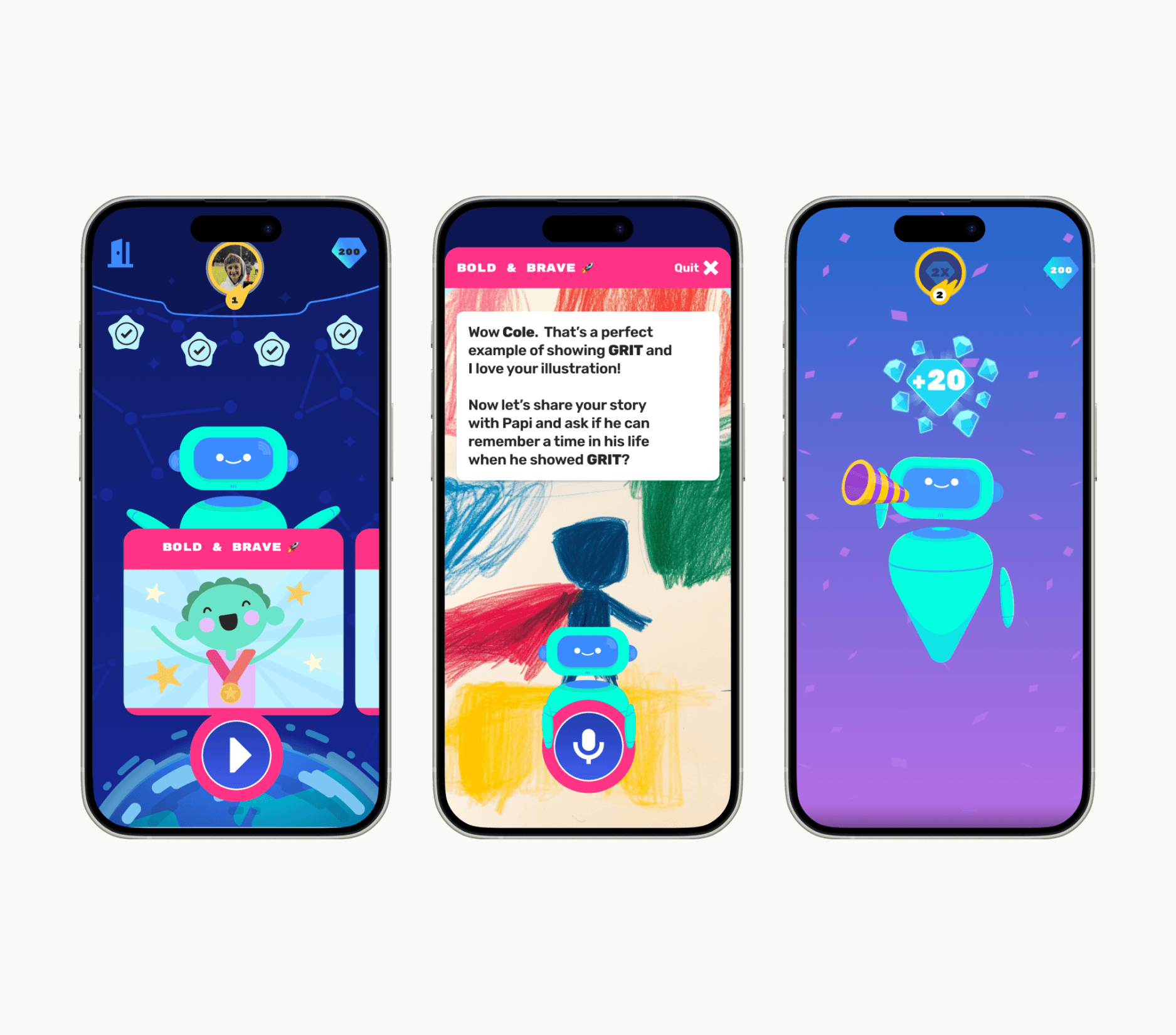
Habit loops increased engagement by making reflection feel fun and repeatable
  • Encouraging 2-3 minute daily reflections

  • Created a simple rhythm: Recognize → Express → Share

  • Balanced intrinsic reward (self-insight) with extrinsic reinforcement (weekly badges, caregiver comments) which resulted in a 70% increase in reflection frequency

Emotional clarity improved communication by giving kids language before conversation
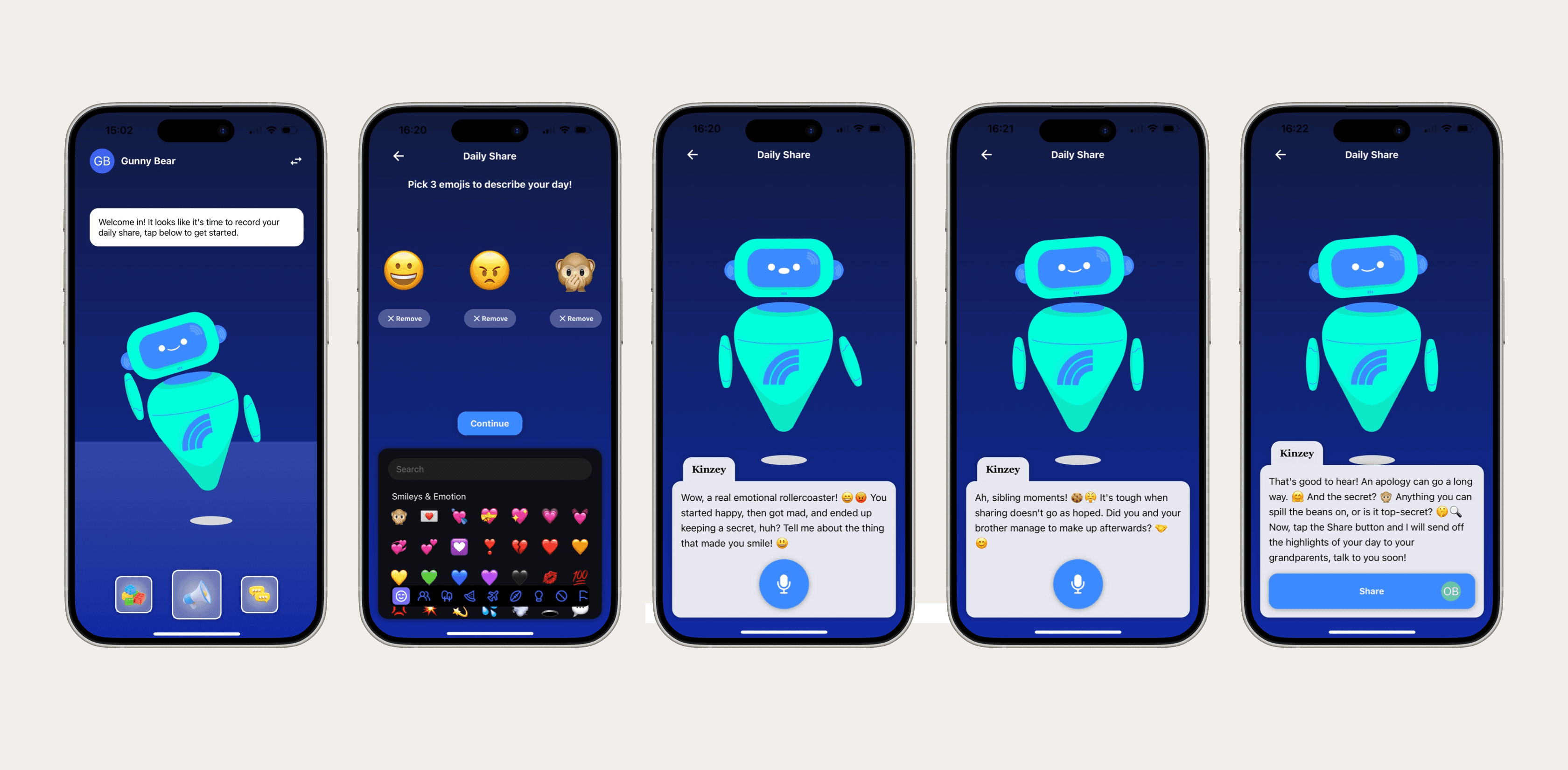
  • Visualizing feelings with icons and a Mood Mapper, where kids pick a face and decorate emotions

  • Enabled caregivers to ask open-ended follow-ups like: “You picked curious—what did you discover?”

  • Gave educators a gentle way to tie emotional reflection to academic moments (e.g., “How did I feel when I solved that problem?”)

AI-assisted storytelling deepened connection by turning moment into meaning
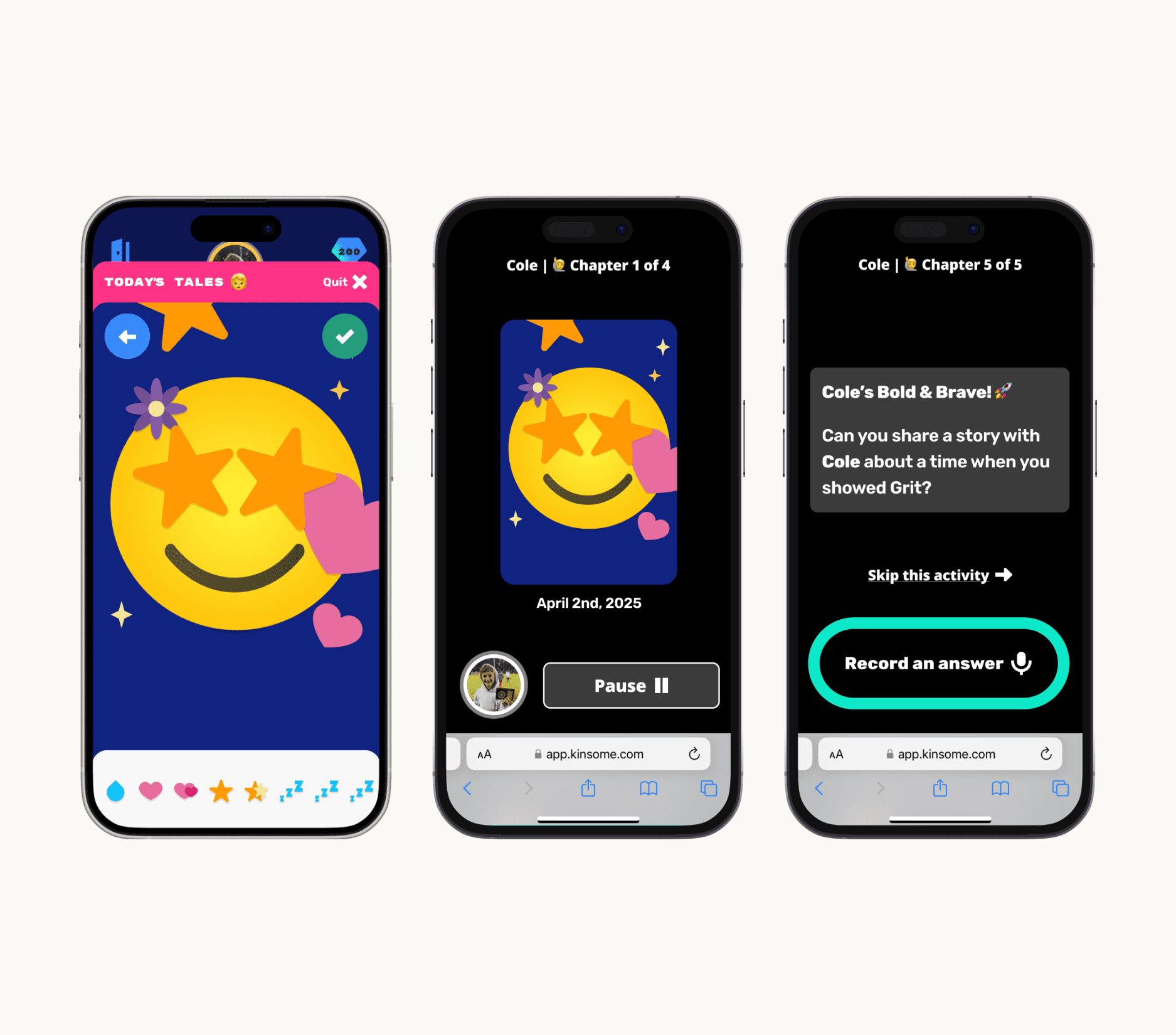
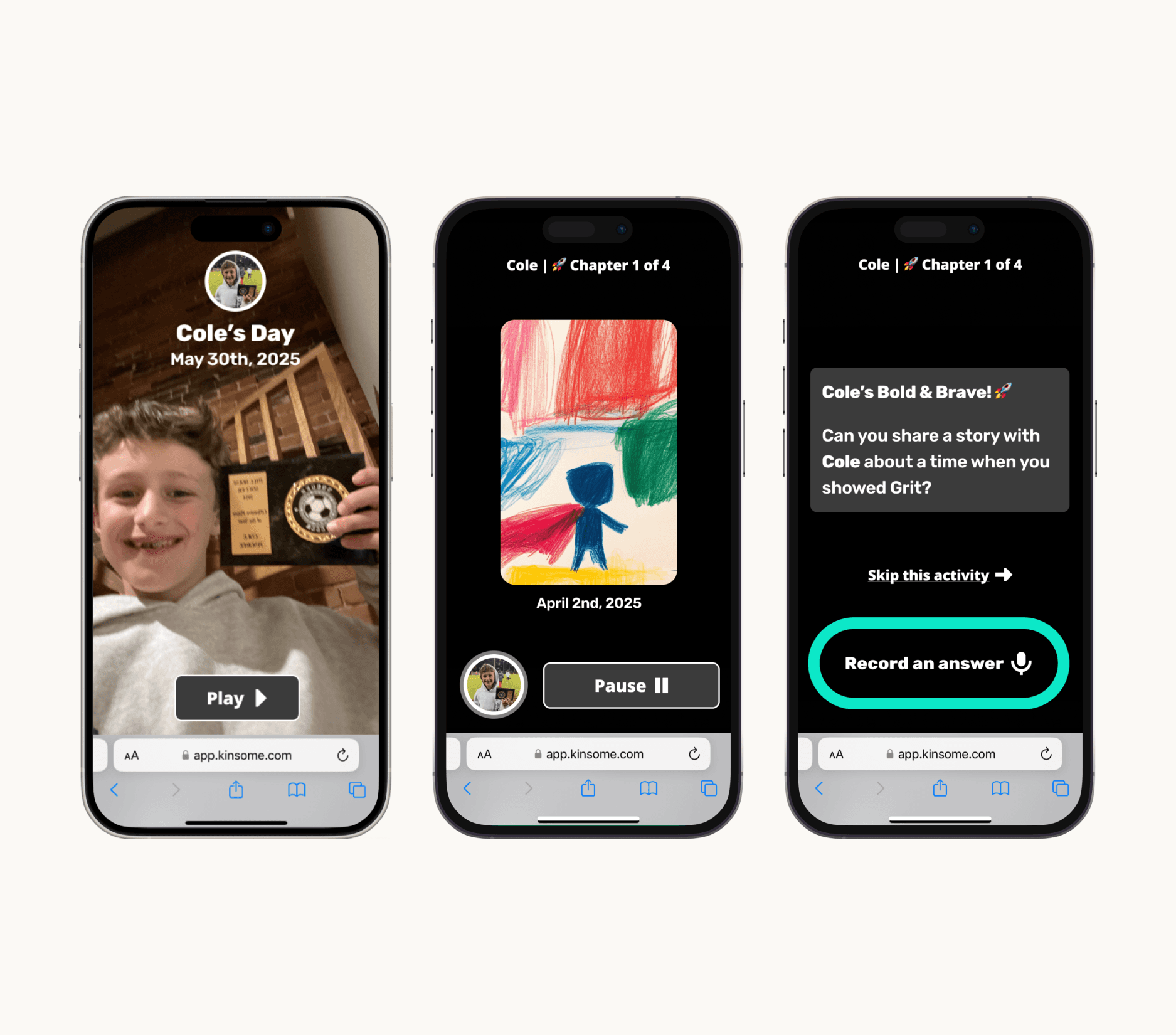
  • Turning reflections into a short slide (child photo + emotion + brief caption + audio recording)

  • Compiling weekly Kinbooks for families to keep and revisit

  • Encouraging caregivers to respond with their own story (“When I was your age, I felt that way when…”), creating inter-generational sharing

Final Product

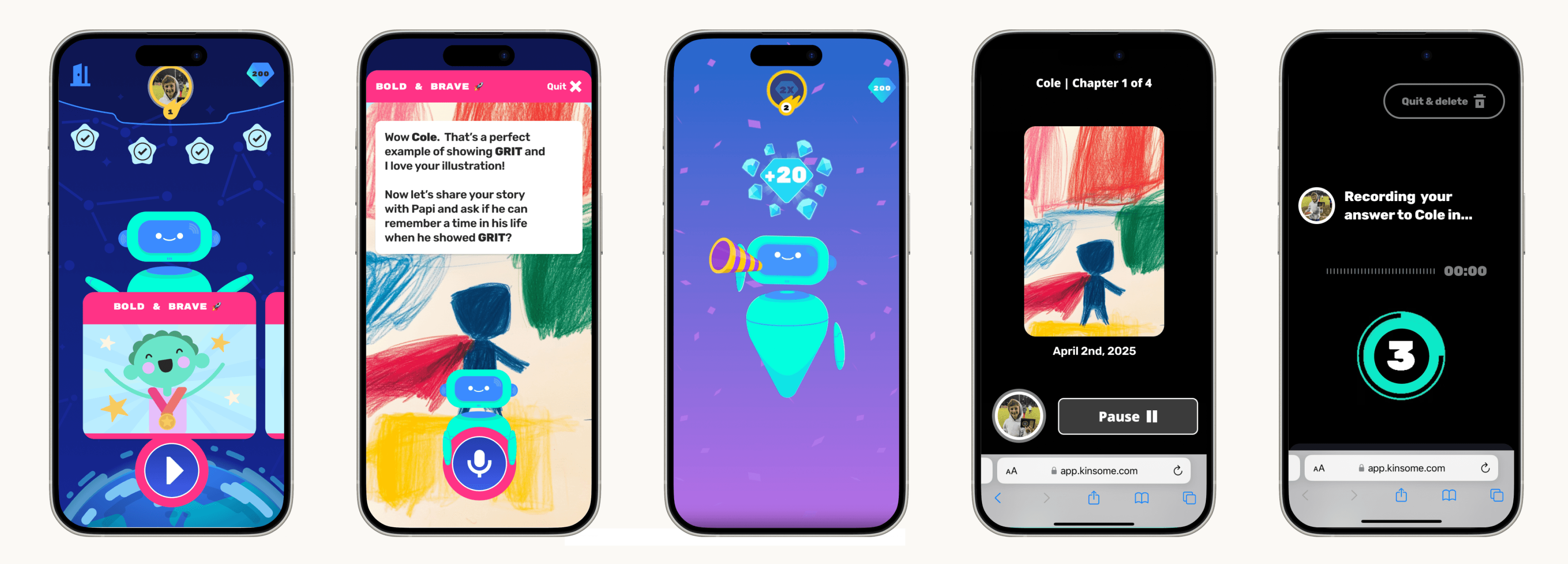
Kinsome AI-powered Intergenerational Storytelling Platform
© 2024 Brianne Baker